
 By
If you are an Oracle developer and you are not using Oracle Dev Gym yet, you are genuinely missing out. I discovered this platform a while back and honestly it became one of my go-to resources for keeping my SQL and PL/SQL skills sharp. Not because someone told me to use it, but because it is actually fun and practical at the same time.
Let me walk you through what it is, what makes it different, and why I personally like it so much.
What is Oracle Dev Gym?
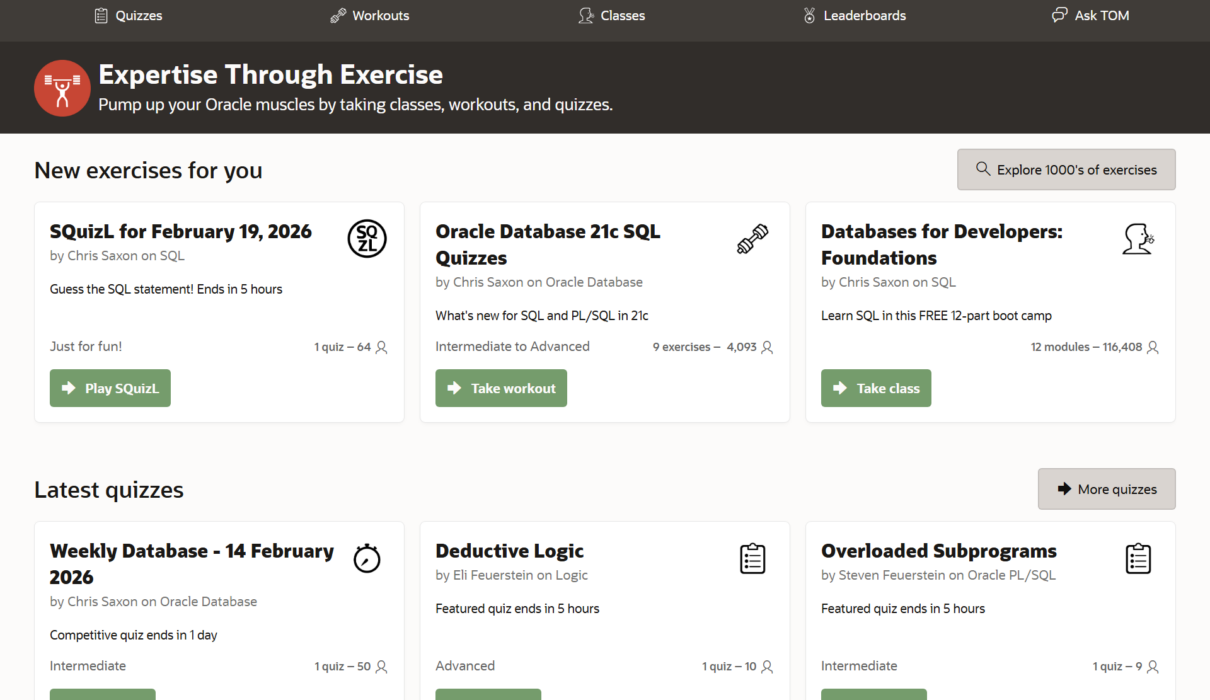
Oracle Dev Gym (also known as DevGym) is a free learning platform built by Oracle for Oracle developers. The whole idea is based on a gym workout concept. You do not get stronger by just watching someone lift weights. You have to actually train. Same goes for coding.
The platform offers quizzes on SQL, PL/SQL, database design, logic and Oracle Application Express. You can take individual quizzes, complete workouts that combine learning material with questions, or enroll in online classes. Browse the live catalog for the available topics rather than relying on a fixed quiz count.
The URL is devgym.oracle.com and it is completely free with your Oracle account.
How to get started with Oracle Dev Gym
Open Oracle Dev Gym and sign in with an Oracle Account. If you do not have one, use the account-creation link on Oracle’s getting-started page.
Choose one starting point:
- New to SQL? Start with Databases for Developers: Foundations. It covers tables, queries, joins and transactions through videos, tutorials and quizzes. You can work at your own pace.
- Already writing SQL or PL/SQL? Search for a topic you use at work, such as FORALL or LISTAGG. Take a regular practice quiz, then review its explanation and verification code. Oracle’s quiz guide
- Want a structured learning path? Browse the free classes and choose a course that fits your level.
For a simple practice routine, pick one topic, answer a quiz, and write down the rule you missed. Revisit it later with another example. Keep the first session small enough that you will come back.
Why I Actually Like It (Personal Take)
I work with Oracle APEX and PL/SQL daily. Even with years of experience, I still come across SQL behavior or PL/SQL edge cases that catch me off guard. Dev Gym is great for exactly that. The quizzes are not just basic “what does SELECT do” type questions. They actually challenge you with real code scenarios, tricky outputs, and edge cases you would find in production.
The workouts are structured really well too. You watch a short video or read an article, and then answer a few quizzes right after. That combination of learning and then immediately testing yourself is what makes the knowledge stick.
For practical examples of habits to watch for, read five PL/SQL mistakes I made as a junior developer.
Key Features Worth Knowing
Quizzes: The core of the platform. Multiple choice questions with detailed explanations after you submit. You can search by keyword, like “FORALL” or “LISTAGG”, and the platform will show you all related quizzes.
Workouts: A set of exercises grouped together around a topic. You can build custom workouts, pick from available ones, or set up a daily single-quiz workout to stay consistent.
Classes: A class brings related learning activities together into modules. Finish every exercise in every module to receive a free PDF certificate. An overall grade of 90% or higher earns a Certificate of Excellence; otherwise, you receive a Certificate of Completion. Use the Print Certificate button after finishing. Oracle’s class certificate details
Weekly Tournaments: Every Saturday a new quiz goes live on SQL, PL/SQL, or database design. You have until Friday to submit your answer. Your submission is ranked against other developers globally. There is also a leaderboard where you can track your weekly, monthly, quarterly, and annual rankings.
Annual Championships: Oracle’s championship rankings page says the top 50 players in a year qualify. Check the current competition instructions for the event and schedule. The championship format challenges you with advanced quizzes under a time limit. It is actually pretty intense in a good way.
SQuizL: The Fun One
SQuizL is a daily SQL syntax puzzle. You choose code fragments to build the statement selected by the quiz author, with up to six guesses. Several statements may be valid SQL, but only one is the puzzle’s answer. You can play anonymously; signing in saves your stats across devices. Try SQuizL
Who is This Platform For?
Honestly, Dev Gym is useful at any level. If you are just starting out with SQL, the beginner-level quizzes and the “Databases for Developers: Foundations” class are a great starting point. If you are an experienced Oracle developer, the intermediate and advanced quizzes in the weekly tournaments will still challenge you.
For someone on the Oracle ACE journey like me, it is also a great way to stay active in the Oracle community, keep learning consistently, and sharpen technical skills that directly translate into better development work.
Do I need to install Oracle Database first?
For Databases for Developers: Foundations, no. Oracle says the course can be completed online without your own database. Follow the exercises and practice resources linked from the course page.
Does a Dev Gym certificate make me Oracle Certified?
A Dev Gym certificate recognises completion or excellence in a class. Oracle professional certifications have separate exam and credential requirements. Completing a Dev Gym class does not, by itself, award one of those credentials. Check the Oracle Certification program for the path you want.
Final Thoughts
Oracle Dev Gym does not feel like a textbook. It feels like actual practice. The quiz format, the community tournaments, the workouts, all of it is designed to make you a better Oracle developer through repetition and challenge. It is free, it is built by Oracle, and the quality of the content is genuinely good.
If you have not tried it yet, go create an account today. Start with a few quizzes in your area and see how you do. You might be surprised where the gaps are, and that is actually the point.
Start with one topic you use at work, take a quiz, and make a note of what surprised you.
2 Comments
Comments are closed.